
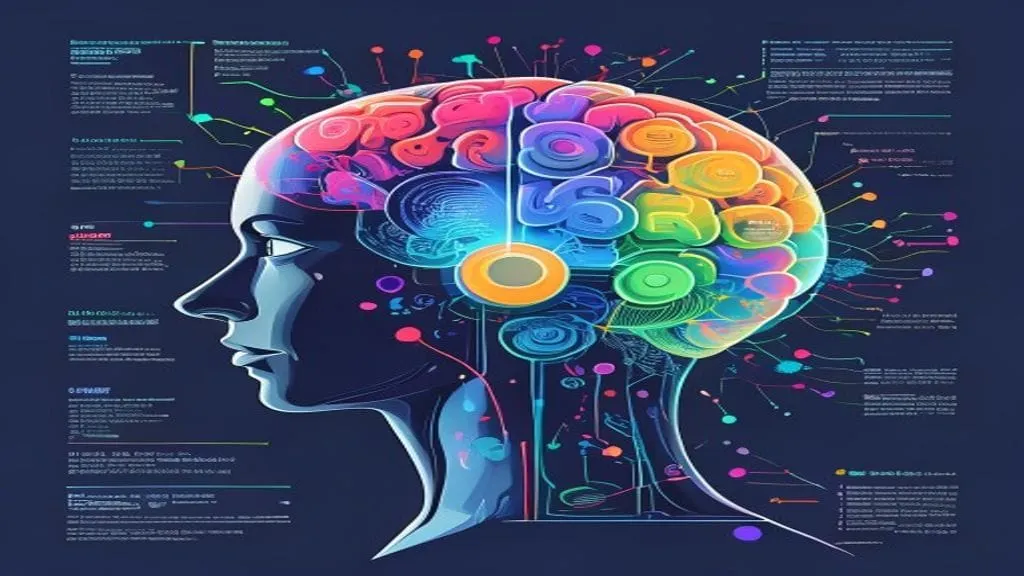
A July 15 arXiv preprint suggests that the routine cycle of interacting with AI agents and adjusting prompts when outcomes fall short acts as an unnoticed neuroplastic training environment, potentially reinforcing the impatience and self-criticism it triggers [S1]. The research lacks peer review and clinical evidence [S1]. However, if the main argument proves true, a highly common digital behavior is simultaneously altering emotional patterns at the neural level, and a slight adjustment in reacting to subpar results could change this.
The loop nobody notices
The researchers, who are associated with Old Dominion University and other organizations [P2], begin with a straightforward premise: engaging with AI agents is now among the most frequent activities people perform on computers [S1]. This engagement follows a predictable pattern: a user makes a request, the AI provides an output, the user evaluates it, and then modifies the request for another attempt [S1].
This recurring process is the root of the proposed issue. The researchers characterize it as a rapid succession of interactions, where an outcome appears and an automatic reaction, such as impatience, perfectionism, frustration, or self-criticism, can occur before conscious reasoning begins [S1]. Whenever an output is unsatisfactory, these automatic responses are triggered repeatedly [S1].
This is where theoretical neuroscience comes into play. Based on activity-dependent synaptic plasticity, the researchers contend that every continuous cycle reinforces the associated neural circuit via long-term potentiation, a mechanism where frequently used synapses become more robust [S1]. Consequently, regular use of AI agents might imperceptibly fortify the exact emotional reactions it elicits [S1].
What it means
The central concept of the paper is that regular AI prompting routines serve as a brain training ground, with the specific "skill" being developed being emotional reactivity [S1].
Consider a trail worn through a grassy field. Walking the same route repeatedly makes the path more distinct and easier to traverse. The researchers suggest that each time an AI outcome causes frustration and prompts an impatient or self-critical reaction, you are treading that neural pathway again, with long-term potentiation making it more pronounced [S1].
The suggested remedy is a technique termed "behind-the-scenes observation." The authors view automatic reactive habits as tangible neural circuits triggered by a pre-cognitive emotional tone, a fleeting instant prior to conscious awareness where a chance for regulation exists [S1]. During this interval, rather than sending an automatic revised prompt, you monitor the neural activity unfolding, preventing the reaction from fully forming [S1]. In terms of plasticity, this permits long-term depression, the weakening of a neural connection, to happen rather than long-term potentiation [S1].
The researchers use generative image creation as an example, an area familiar to most AI tool users [S1]. A user enters a prompt, the generated image is incorrect, and the temptation to angrily retype the prompt emerges. The study asserts that the external action of a frustrating prompting session appears almost the same regardless of whether one observes their reaction, but the internal neurological impact is reversed [S1]. Externally, the user is still entering prompts. Internally, one approach reinforces the frustration circuit while the other diminishes it.
The proposed framework includes three observational levels and two application methods [S1]. One method is guided by the user and needs no modifications to current software [S1]. The alternative method is assisted by the agent, where a standard AI is slightly adjusted to facilitate observation during the critical interval [S1].
What it means for business
For a small design firm producing numerous image generations daily, or a local real estate office using an AI to write property descriptions, the study's perspective, if eventually proven, indicates that the expense of AI tools goes beyond the monthly subscription to include a gradual reinforcement of reactive behaviors that affect how employees interact with clients, meet deadlines, and work with colleagues.
The user-guided approach needs no additional software [S1]. A company could test it immediately by incorporating a single step into their process: upon receiving a disappointing AI output, wait two seconds and observe the rising frustration before modifying the prompt. The study suggests this brief delay alters how the brain processes the frustration, despite the external action remaining unchanged [S1].
The agent-assisted approach is more theoretical. It would require slightly modifying a current AI agent to encourage observation during the critical interval, possibly by adding a reflective question before the user continues [S1]. No such product is currently available. The paper outlines the idea rather than an actual feature.
For groups developing AI agents, this research relates to a wider trend in agent creation. This preprint highlights a completely different dimension: rather than focusing on the agent's dependability, it examines the impact of the interaction cycle on the human user.
What we don't know yet
The study is a preprint without peer review, classified within computer science (cs.AI, cs.LG) rather than neuroscience or neurobiology [S1]. The writers consistently use cautious terminology like "may," "propose," and "observe" [S1]. None of the assertions regarding neuroplasticity have been confirmed through human trials or clinical evidence.
The research does not demonstrate that engaging with AI leads to quantifiable neurological alterations. It presents a theoretical mechanism and suggests a behavioral practice. It remains an unanswered empirical question whether long-term potentiation and long-term depression function in routine AI use exactly as the researchers outline.
The related research is limited. A 2025 preprint named Gearshift Fellowship introduced a neurocomputational gaming platform to study human-AI adaptability, but it lacks citations and also lacks peer review [P4]. A Meituan GitHub initiative, DPT-Agent, utilizes dual process theory for language agent structures, yet it focuses on the agent's reasoning capabilities rather than human neuroplasticity [P3]. Another repository focusing on neuroplastic expansion in deep reinforcement learning is available, but it pertains to RL training rather than human-AI interactions [P5].
The next specific milestone to monitor is if any neuroscience team adopts the framework for actual testing. In the meantime, the paper presents an intriguing hypothesis rather than a proven conclusion.
If this kind of reporting earns your time, subscribe to keep it coming.
Sources
- [S1] Human-AI Agent Interaction as a Neuroplastic Training Environment — arXiv preprint (cs.AI, cs.LG) (attributed)
- [P2] Human–AI Agent Interaction as a Neuroplastic Training Environment — Human–AI Agent Interaction as a Neuroplastic Training Environment (attributed)
- [P3] meituan-longcat/DPT-Agent — meituan-longcat/DPT-Agent (attributed)
- [P4] Gearshift Fellowship: A Next-Generation Neurocomputational Game Platform to Model and Train Human-AI Adaptability — Gearshift Fellowship: A Next-Generation Neurocomputational Game Platform to Model and Train Human-AI Adaptability (attributed)
- [P5] torressliu/neuroplastic-expansion — torressliu/neuroplastic-expansion (attributed)
More from Not A Tech Guy
- Spectrum can't predict when context helps time-series forecasting
- LLM rubrics for AI grading biased toward high scores
- EnCF data assimilation filter handles non-Gaussian observations
Generated from an audited evidence pack with primary-source research. Social-media items are discussion signals, not verified facts. Nothing here is financial, legal or medical advice.