
NanmiCoder, a Singapore-based developer who goes by 程序员阿江 online, has pushed his MediaCrawler scraper to 67,755 GitHub stars, picking up 102 new stars on the day it landed on the trending list S¹P⁵. The Python tool harvests public posts and comments from seven of China's biggest social platforms, yet its own README bans commercial use while the same maintainers sell a paid Pro version S¹.
My read: The gap between the repo's "learning only" disclaimer and a subscription Pro tier is hard to miss. The free repo says don't use this commercially; the Pro version charges for exactly the features a commercial operator needs.
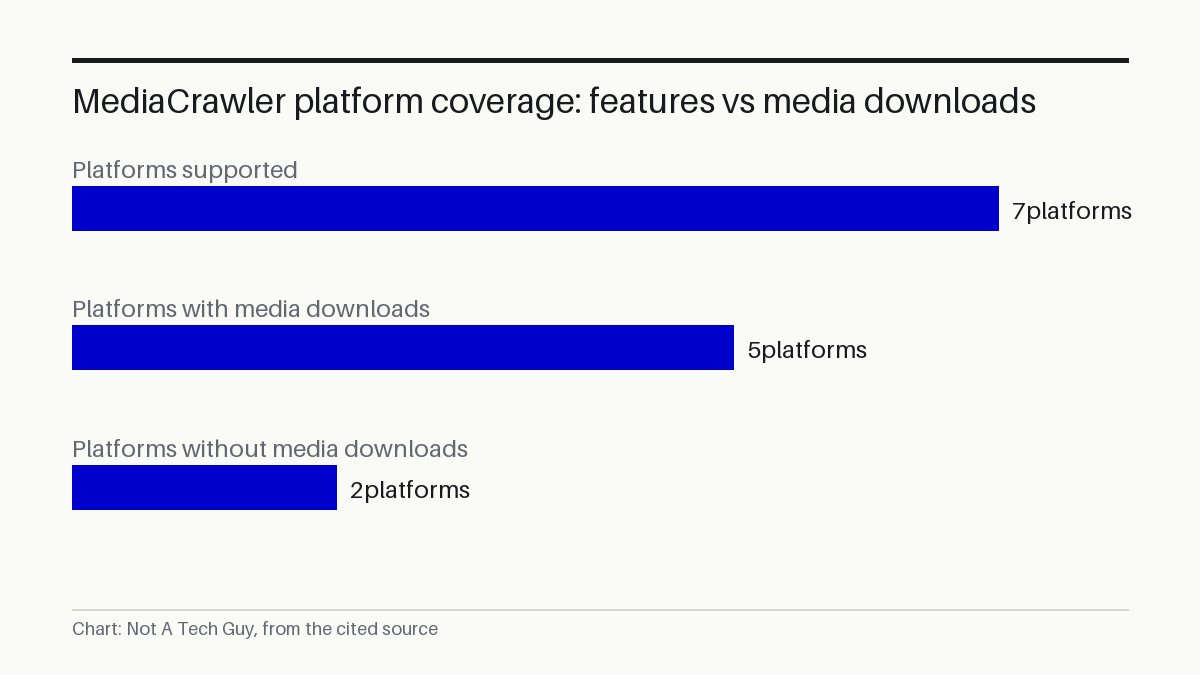
The tool targets Xiaohongshu, Douyin, Kuaishou, Bilibili, Weibo, Baidu Tieba, and Zhihu S¹. All seven support keyword search, crawling by post ID, pulling nested secondary comments, targeting specific creator profiles, caching login sessions, routing through IP proxy pools, and generating comment word clouds S¹ — these capability claims come from the project's own README and have not been independently tested. Media downloads, covers, videos, and images work on five of the seven: Xiaohongshu, Douyin, Kuaishou, Bilibili, and Weibo. Tieba and Zhihu lack media fields in their data structures, so downloads are off the table there S¹.
Playwright lets the tool skip each platform's signature encryption
Every major Chinese platform signs its API requests with encryption parameters that are expensive to reverse-engineer. MediaCrawler avoids that fight entirely. It uses Playwright, a browser automation framework, to open a real Chrome window where the user logs in by hand S¹. Once authenticated, the tool runs JavaScript expressions inside that live browser session to grab the signature parameters each platform expects, skipping the need to crack any site's encryption S¹. By default it connects through Chrome DevTools Protocol to an existing Chrome installation, version 144 or newer, with a standard Playwright mode as a fallback S¹. The project requires Node.js 16 or higher and recommends the uv Python package manager S¹.
Free repo bans commercial use while paid Pro sells commercial features
The README carries a disclaimer stating the repository is for "learning and reference" only, prohibits commercial use, and disclaims all legal liability for anyone who runs it S¹. The same maintainers offer MediaCrawlerPro, a paid subscription that adds the ability to resume interrupted crawls, run several accounts at once with proxy-pool routing, drop the Playwright dependency, and plug in AI agents S¹ — though these Pro features are described only on the maintainers' own page and have not been independently verified.
The Pro version is not open-source S¹.
A brand analyst in Sydney tracking sentiment on Douyin could use the free version to pull public comments on a keyword. The moment they need to run multiple accounts or resume a crawl after a rate-limit block, they hit the paywall.
Platform terms, not the README, govern actual use
None of the seven platforms endorse the tool. The README specifies it targets public information only, not content behind authentication walls S¹. But the tool requires a real browser session with a real login, which means it operates under the user's own account on each platform. A marketing team considering it for Chinese-platform research should read the Terms of Service for each site before running a query, because automated collection, even of public data, typically violates those terms. An English README is available alongside the Chinese version P², and the maintainer's GitHub profile lists 55 public repositories and 3,083 followers P⁵.
The repository's Discussions tab shows users asking about rate-limit ceilings and whether view counts can be scraped, questions that remain unanswered in the visible threads P⁴.
Sources: S1 — NanmiCoder/MediaCrawler: 小红书笔记 | 评论爬虫、抖音视频 | 评论爬虫、快手视频 | 评论爬虫、B 站视频 | · P2 — README_en.md · P3 — Trending repositories on GitHub today · GitHub · P4 — NanmiCoder/MediaCrawler Q A · Discussions · GitHub · P5 — 程序员阿江-Relakkes
Written from 5 sourced items, 4 of them primary.