

Sachin Sharma, a bug-hunting and GenAI security researcher, published an open-source skill bundle that turns Claude Code into a guided vulnerability scanner, and it climbed to 6,516 GitHub stars in a single day S¹S².
The repository, elementalsouls/Claude-BugHunter, packages 681 patterns drawn from disclosed HackerOne reports across 24 vulnerability classes into a plugin for Anthropic's terminal-based coding agent S¹. Claude Code itself has 155,803 stars on GitHub P⁶, and a wave of community skill bundles has followed it.
My read: The number that matters is 433, not 681. The README says 433 of the disclosed-report patterns are individually cited and auditable S¹, which means 248 are not. Before treating this as a validated playbook, I would want to see those citations checked against the original HackerOne reports. The "battle-tested" claim is self-reported, the skill count is inconsistent (82 in the header, 83 in the body) S¹S², and Anthropic has not endorsed it. This is one researcher's personal stack, shared publicly.
Skills, commands, and attack matrices make up the bundle
The README describes 58 hunt-* skills curated from those 681 HackerOne reports, plus 15 slash commands and what the changelog calls enterprise identity and infrastructure attack matrices S¹P³. The credits file is candid about provenance: the project began as one contributor's personal security-testing toolkit and incorporates foundational code borrowed from earlier community projects P⁴. Skills and commands are copied directly into the repository so installation is a single step.
Installation requires Claude Code itself, Python 3.9 or later for the cbh CLI runner, and either macOS, Linux, or Windows P⁵. Two paths exist: install as a Claude Code plugin, or run a shell script that copies the files into place S¹.
The README claims the bundle is battle-tested across authorised red-team engagements and public training platforms including DVWA, OWASP Juice Shop, Hacker101, and testphp.vulnweb.com S¹. Nobody outside the author has corroborated those engagements, and the 681 patterns have not been independently validated beyond being curated from public reports.
Penetration testers can adopt it, but citations need spot-checking
A penetration tester who already runs Claude Code could install the bundle, point it at an authorised target, and use the hunt-* skills to structure their workflow around known vulnerability classes. The Burp MCP integration S¹ suggests the bundle can drive Burp Suite, the industry-standard web proxy, from inside a Claude Code session.
The first thing to verify is whether the 433 cited disclosures actually link to the HackerOne reports they claim to draw from. The changelog says 28 hunt-* skills were strengthened with cited public HackerOne disclosures and lists 433 distinct disclosures P³. A reader who opens the skills directory and spot-checks five citations against their original reports will know quickly whether the grounding is real or aspirational.
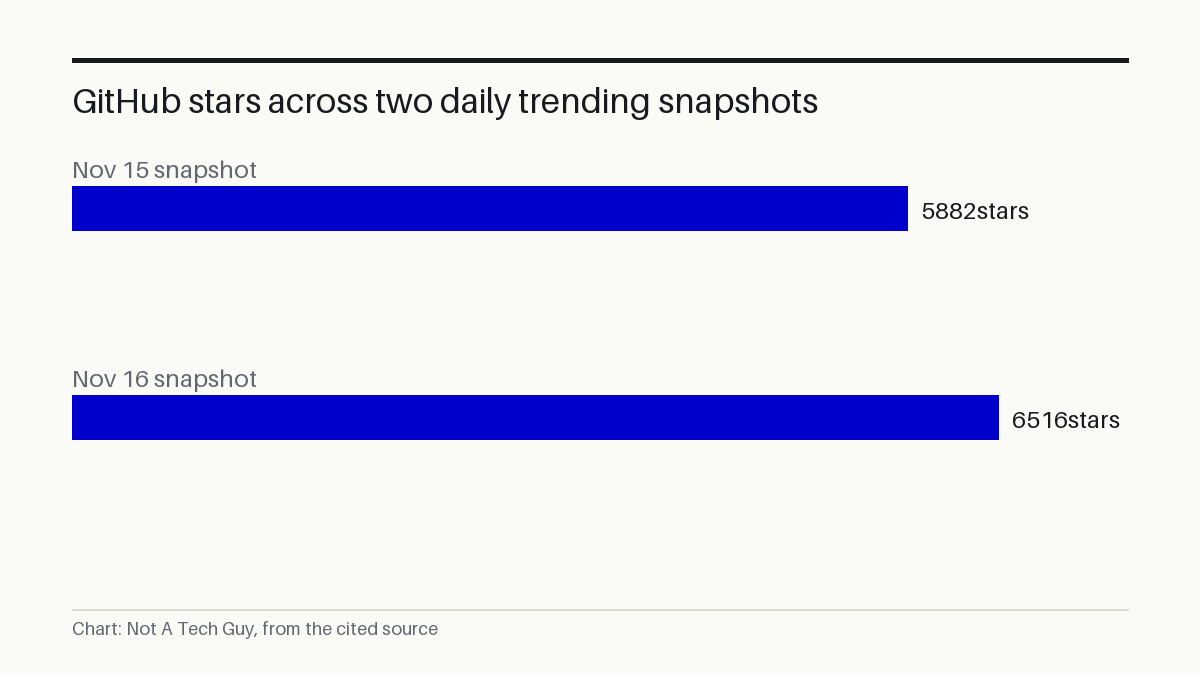
The repository is on GitHub Trending as of 16 November 2026 S¹, with star counts that moved from 5,882 to 6,516 across two daily snapshots S¹S². The next checkpoint is whether the changelog's Unreleased section, which added the disclosed-report grounding, ships as a tagged version.
Sources: S1 — elementalsouls/Claude-BugHunter: A Claude Code skill bundle for bug hu · S2 — elementalsouls/Claude-BugHunter: A Claude Code skill bundle for bug hu · P3 — CHANGELOG.md · P4 — docs/credits.md · P5 — INSTALL.md · P6 — anthropics/claude-code
Written from 6 sourced items, 4 of them primary.