A new arXiv paper from Beijing Institute of Technology, posted 23 July, claims to answer multi-entity questions that defeat today's retrieval-augmented language models S¹. The framework, HyGRL, combines unstructured text with structured knowledge graphs and trains a model to reason across the merged structure S¹. The researchers report that it surpasses current leading methods in accuracy while maintaining minimal token expenses and fast processing speeds S¹. Whether those claims hold up depends on numbers the abstract does not provide.
My read: This is the third RAG-improvement paper I've seen this month targeting the same weakness: standard retrieval fails when a question requires connecting multiple entities across separate documents. HyGRL's contribution is the hybrid graph: rather than only retrieving documents, it builds a network where entities and text coexist, then learns to reason over that network with reinforcement learning. What I'm skeptical of is the efficiency claim. "Extremely low token costs" and "near real-time inference" are strong promises from an abstract with zero figures attached. Until I see benchmark numbers and latency measurements, I'd treat the efficiency story as a hypothesis, not a result.
Why multi-entity questions break standard RAG
Ask a standard retrieval system "Which companies founded by former employees of Company X went public in 2023?" and it will struggle. The question requires connecting people to companies, companies to IPO dates, and employment histories across separate documents. The HyGRL paper identifies three ways current methods fail at this S¹.
Conventional RAG systems simply pull similar text passages and halt, missing the step-by-step logic required to link facts from different documents S¹. Older graph-based methods that construct a knowledge graph prior to querying suffer from sparse structures, meaning they frequently miss the exact links needed for tough queries S¹. Meanwhile, systems that rely on a language model to generate the graph on the fly consume so many tokens that they become financially impractical S¹.
Microsoft's GraphRAG, the most prominent open-source Graph-RAG system with 34,771 GitHub stars, sits in this last category P⁵. It works, but the token cost of building graphs with an LLM is the known trade-off.
How HyGRL builds and reasons over its hybrid graph
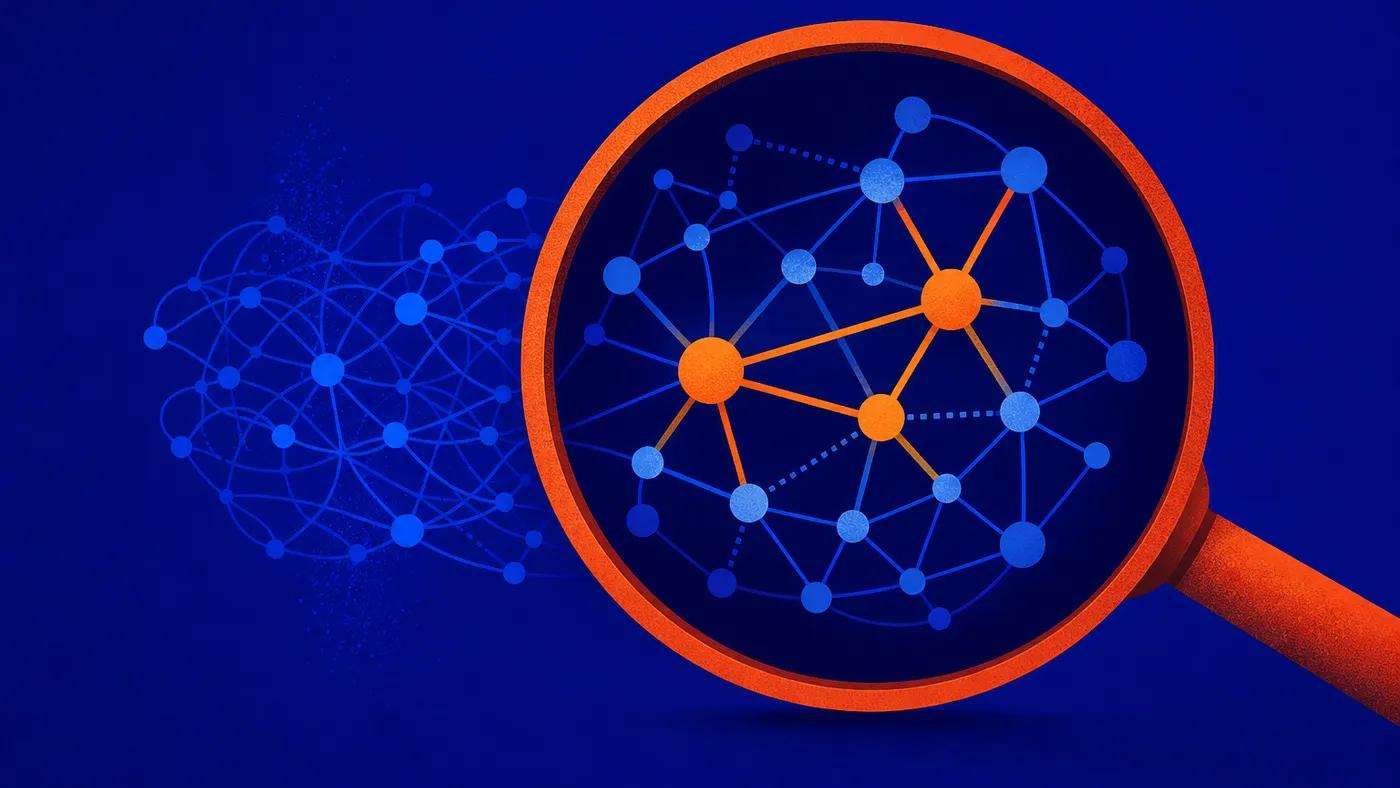
HyGRL constructs a combined structure that integrates raw text with the relational links of a knowledge graph S¹. Instead of choosing between text retrieval and graph retrieval, the system has both available at once.
The reasoning process is learned in two stages S¹. Initially, the model uses imitation learning to mimic expert behaviors, effectively learning from demonstrations of effective reasoning. Following that, a reinforcement learning phase sharpens the model's choices using feedback from a language model that evaluates which reasoning routes are most effective S¹.
This places HyGRL in a growing cluster of work applying reinforcement learning to graph-based retrieval. Graph-R1, another recent arXiv paper, frames the entire retrieval process as an agentic task learned end-to-end with RL P⁴. PRoH, presented at WWW 2026, takes a similar approach with knowledge hypergraphs P³. The shared intuition across all three: retrieval should be adaptive, not fixed.
The cost claim that needs proof
The researchers claim their framework achieves superior answer correctness and reasoning quality compared to existing leading methods, all while keeping computational expenses minimal and processing speeds fast enough for practical use S¹. Those are the two claims that would make HyGRL genuinely interesting if true. Solving the accuracy problem without solving the cost problem would just add another expensive option to a field that already has one in Microsoft's GraphRAG P⁵.
But the abstract provides no figures at all. The paper is a preprint and has not been peer-reviewed S¹. The authors are Junyi Wang, Kaiyu Feng, Zixin Wang, Liaopeng Qiao, and Ye Yuan from Beijing Institute of Technology P².
What to do about it
Consider a legal research team building a knowledge base of case law. When a lawyer asks "Which judges who ruled on patent cases in 2024 also clerked at firms that later merged?", standard RAG will retrieve individual case documents but cannot connect the judge-to-firm-to-merger chain across separate sources. A graph-based approach like HyGRL could, in principle, build those connections into the retrieval layer so the reasoning happens before the language model generates an answer.
If you are building RAG systems and hitting walls with multi-entity questions, the HyGRL code is on GitHub at github.com/wjywjy123/HyGRL S¹. The practical step this week: clone the repository, check whether it runs on a small sample of your own documents, and compare its token usage against your current pipeline on a handful of multi-entity queries. Do not deploy it on the strength of the abstract alone.
What we don't know yet
The abstract claims HyGRL outperforms state-of-the-art baselines, but names no benchmarks, reports no accuracy numbers, and provides no latency or token-cost measurements S¹. The GitHub repository is cited but its contents, license, and activity level are unverified S¹. The paper has not been peer-reviewed or accepted at a conference S¹.
The broader field is still early. PRoH, the knowledge hypergraph approach presented at WWW 2026, has 2 GitHub stars and a single contributor P³. Graph-R1 is also a preprint with no conference acceptance listed P⁴. No method in this space has emerged as the standard.
The next signal: a revised version of the HyGRL paper on arXiv with benchmark numbers, or independent results from a team running the open-source code. We will check the arXiv listing and GitHub repository for updates. If you want to follow what happens next, subscribe and we will track it.
Sources: S1 — HyGRL: Adaptive Hybrid Graph Reasoning for Multi-Entity Questions · P2 — HyGRL: Adaptive Hybrid Graph Reasoning for Multi-Entity Questions · P3 — zaixjun/PRoH · P4 — Graph-R1: Towards Agentic GraphRAG Framework via End-to-end Reinforcem · P5 — microsoft/graphrag
More from Not A Tech Guy
- CARGO beats trained LLM routers without training data
- LLM agents pass 100% JSON schema checks, still fail 1 in 5 orders
- AI agents turn robot videos into physics simulations
Generated from an audited evidence pack with primary-source research. Social-media items are discussion signals, not verified facts. Nothing here is financial, legal or medical advice.