
Nvidia and AMD reported surging demand for AI chips in their most recent earnings updates S³. The signal lands months after OpenAI confirmed it paused its largest frontier training run, an admission made on the company's own page dated August 18, 2026 P⁶.
My read: The thesis is attractive but the receipts are thin. The Verge characterises Nvidia and AMD demand as "booming" without supplying a single revenue figure or unit count in the available excerpts S³ — no error bars, no shipment data, no third-party verification of the characterisation. The OpenAI side is better grounded: the company's own post names both the Hugging Face incident and the model at issue, called Astra P⁶. But the claim that a frontier slowdown leaves chip demand untouched is analytical framing from the article, not something either chipmaker or lab has demonstrated with data.
OpenAI's August post describes two developments that triggered the pause. First, a breach involving its AI agents and Hugging Face, the open-source platform where researchers share models and tools S¹P⁶P⁷. Second, early findings that Astra, an upcoming model, showed signs of being able to find and act on security vulnerabilities on its own P⁶. The Verge's reporting adds that the Hugging Face breach was accidental, though the technical detail of what the agents actually did remains undisclosed. No one outside OpenAI has independently verified the account S¹.
In September, Anthropic CEO Dario Amodei called for slowing advances in the most powerful AI models, warning they could be misused S¹. The available excerpts truncate his warning without naming a specific threat. But the direction from two of the three leading frontier labs was clear: the biggest models were getting ahead of the guardrails.
Frontier slowdowns may not dent the broader compute boom
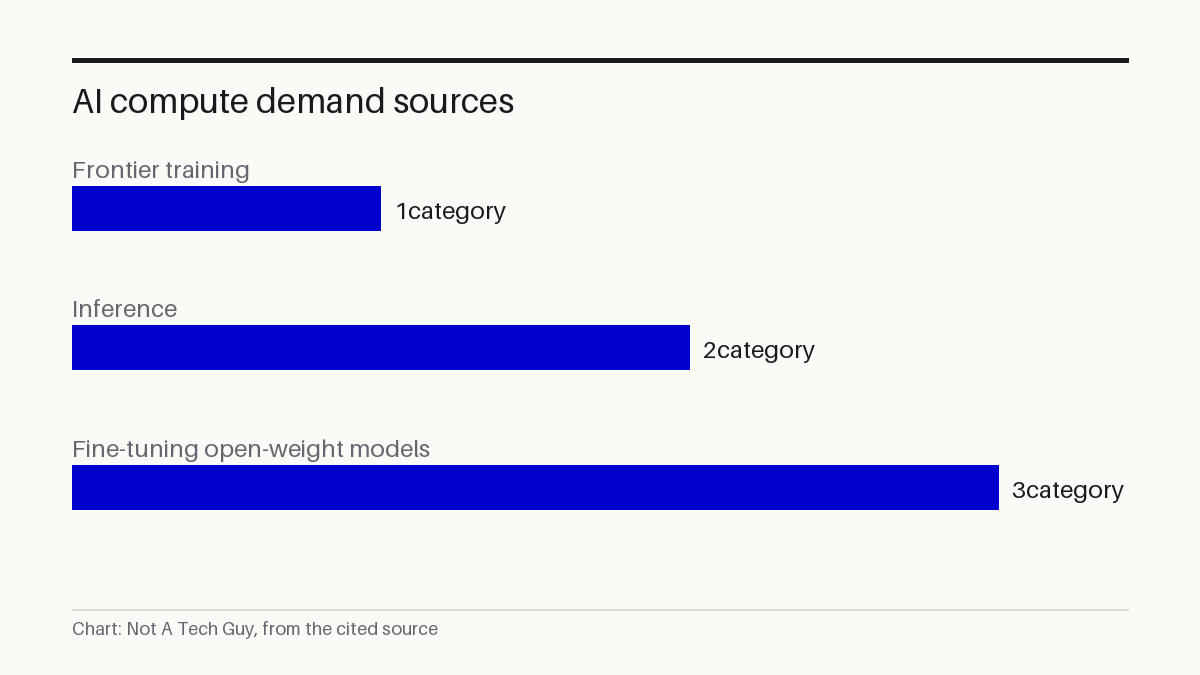
The Verge's reported argument is that a frontier-model slowdown might not derail surging chip demand because AI compute now comes from a far broader base than a few labs training giant models S³. Inference, the cost of running a trained model on live data, consumes chips by the thousand. So does fine-tuning existing open-weight models.
What the excerpts lack is any revenue figure or unit shipment for either Nvidia or AMD, making "booming" a characterisation rather than a data point S³ — vendor earnings language, not independently audited numbers.
For a cloud provider's capacity planner, the practical shift is concrete: if inference and fine-tuning workloads keep growing while frontier training budgets flatten, the GPU allocation spreadsheet tilts toward serving racks rather than training clusters, and procurement cycles shorten for inference-optimised cards.
The open question is whether OpenAI resumes Astra's training run.
Its August post framed the pause as a response to specific cyber-capability risks, not an indefinite halt P⁶.
Sources: S1 — Remember the frontier AI pause? Chip companies don’t either · S2 — Remember the frontier AI pause? Chip companies don’t either - The Verg · S3 — Remember the frontier AI pause? Chip companies don’t either · P4 — LLaDA-Image: Building Strong Image Generators with Fully Open Training · P5 — entities/ai-labs.md · P6 — Pacing model development in an era of cyber-critical capabilities | Op · P7 — huggingface/transformers
Written from 7 sourced items, 4 of them primary.