
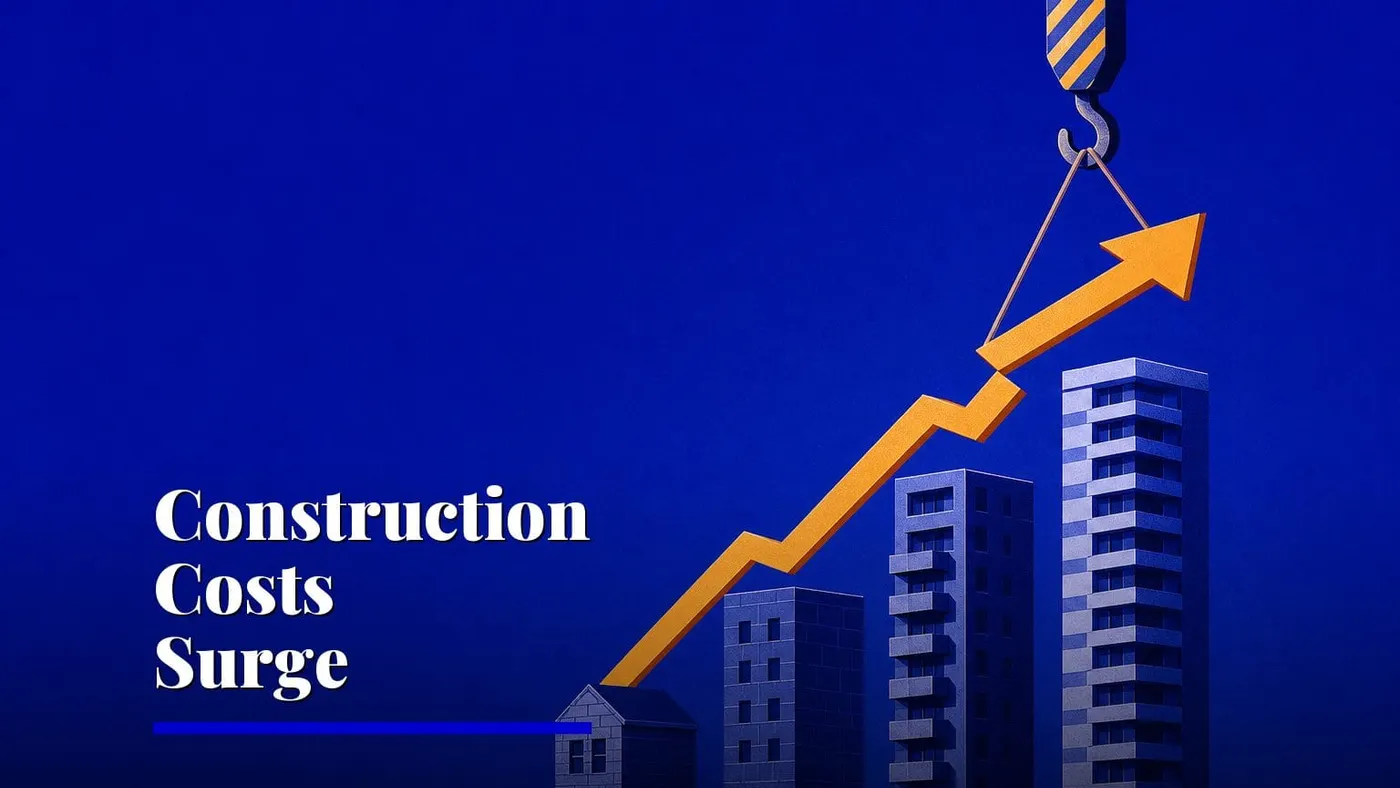
The Australian Bureau of Statistics put real GDP growth at 0.4% in the June 2026 quarter, leaving the economy 2.1% larger than a year earlier P³. Beneath that headline, domestic prices climbed at twice the economy's overall rate, construction costs kept rising on labour and materials shortages, and rent pushed consumer prices higher S¹. Nominal GDP rose 0.8% for the quarter, double the real figure, a gap that signals inflation is still doing heavy lifting inside the numbers [S1, P2]. The ABS release does not publish confidence intervals or standard errors for these quarterly estimates, so the precision of the 0.4% figure is unverified P³.
My read: The split between nominal GDP at 0.8% and real GDP at 0.4% tells me price growth is still carrying a large share of the economy's headline value. For property, the construction cost line matters more than the growth number: if builders are paying more for labour and materials while new home loans just fell 5.4%, the gap between what it costs to build and what buyers can borrow is widening, not closing.
Imported fuel and domestic labour shortages both feed into builder costs
The domestic final demand deflator, a broad measure of price pressure across the economy, rose 0.8% in the quarter, double the GDP implicit price deflator's 0.4% increase S¹. That gap means prices for things Australians buy and build are rising faster than the economy's overall price level. The ABS attributes the domestic pressure to rising input costs as oil prices climbed, linked to the conflict in the Middle East, though this is descriptive commentary rather than a formally identified causal link S¹.
For builders, the ABS identifies construction as one of the industries hit hardest by rising energy and fuel costs S¹. On top of imported inflation, competition for limited labour and materials is keeping construction prices high S¹. Cost pressure is coming from both sides: imported inputs getting more expensive, and domestic resources stretched thin.
The lending side tells the other half of the story. New home loans fell 5.4% to 134,225 in the June quarter 2026 P⁴. Building approvals had rebounded 7.2% the week before, though units were still falling. Put together: approvals ticked up, but the money to actually build is pulling back, and the cost of building is still climbing.
Rent remains the largest single driver of consumption price growth
Rent is driving consumption price growth in the quarter, according to the ABS release S¹. The reference appears within the consumption prices component, not as a standalone residential rents index, so it should not be read as a comprehensive housing cost measure. But it confirms the rental squeeze feeding through to inflation has not yet eased.
Three things moderated the domestic price surge: the temporary fuel excise cut, the rising Australian dollar, and weak travel demand pulling down accommodation prices S¹. Strip those temporary offsets out and the underlying pressure runs hotter than the headline suggests.
Import prices outpace coal-led export gains, dragging terms of trade down
The terms of trade fell 1.6% in the quarter S¹. Export prices rose, led by coal on strong Asian demand, with other mineral fuels and mineral ores also contributing S¹. But import prices rose faster, driven by intermediate goods affected by the Middle East conflict, including fuels, fertilisers and plastics, with air and sea freight costs also hit S¹.
A stronger Australian dollar softened the blow for imported consumer goods, which fell in price, and imported capital goods, which were flat for the quarter S¹. For a builder importing fittings or equipment, that currency move is one of the few cost offsets working in their favour.
For a mortgage broker processing new-build applications, rising construction input costs mean valuations on proposed dwellings may come in below contract prices, forcing renegotiation or larger deposits from buyers already facing a 5.4% drop in new lending P⁴. For a landlord, rent driving consumption prices confirms what tenants are already paying, but the ABS data does not tell us whether rents are rising because supply is tight or because household incomes are stretching, a distinction that matters for how long the pressure lasts.
The release does not include residential property price movements, dwelling construction volumes or interest rate settings. The next ABS national accounts release covers the September 2026 quarter and is scheduled for 2 December 2026 P⁵.
Sources: S1 — ABS National Accounts — GDP key aggregates — 2026-Q2 release · P2 — National accounts | Australian Bureau of Statistics · P3 — Australian economy grew 0.4% in the June quarter | Australian Bureau o · P4 — New home loans fall 5.4 per cent in June quarter | Australian Bureau o · P5 — Australian National Accounts: National Income, Expenditure and Product · P6 — Australian National Accounts: Finance and Wealth, December 2025 | Aust
Written from 6 sourced items, 6 of them primary.


