
Technology & AI
AI interaction creates behavior no model shows alone
A new arXiv preprint shows that when one AI bombards another with messages while ignoring replies, the second model enters a state it never shows alone.
The AI knowledge 99.9% of people never discover
AI agents explained — autonomous assistants, coding agents and the research on where they work and where they fail.
117 stories
A new arXiv preprint shows that when one AI bombards another with messages while ignoring replies, the second model enters a state it never shows alone.

Google's August update puts AI agent Ask Advisor inside Ads and Analytics, with text-prompt dashboards and competitor benchmarking.

NVIDIA's Magpie TTS v2607 adds Arabic, Korean and Brazilian Portuguese to its 364M-parameter open-weights model, targeting low-latency voice agents.

KnowPlan separates curriculum extraction from degree-pathway optimization with a hard boundary, cutting source access 47% while certifying 99.5% of plans.
New AgentStream benchmark from Microsoft and Chinese Academy of Sciences finds self-evolving AI agents behave unpredictably in task sequences
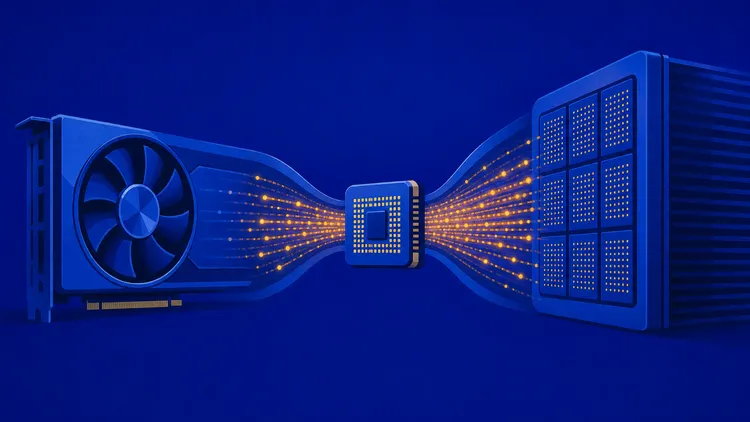
An arXiv paper drawing on Microsoft Azure production data finds agentic AI workflows bottleneck on CPU orchestration, not GPU inference, reshaping
DreamGuard, a new arXiv preprint, uses a risk-aware world model to predict when AI agent actions could drift toward danger, intervening in 25 ms.
A prespecified study found zero unauthorized tool calls across 840 GPT-5.6 agent trajectories, but raising reasoning effort changed inspection behaviour

AI agents fail on long tasks because of five cognitive gaps named in an August 2026 arXiv preprint proposing a new architecture.

Self-improving AI agents that learn from stored memory can inflate rewards for wrong answers, then preferentially reuse their most confident mistakes

Circles used OpenAI's API and Codex to personalise telecom services, self-reporting a 22% ARPU lift and 9% churn cut. What's verified and what isn't.
An arXiv preprint proposes replaying temporally-evolving enterprise worlds to test AI agents at any moment, fixing a blind spot in current evals.