

Technology & AI
Kernel Forge: AI agent writes CUDA kernels, 2.83x speedup
A new open-source tool from University of Michigan researchers lets any PyTorch model get automatic CUDA kernel speedups without manual GPU programming.
The AI knowledge 99.9% of people never discover
AI model releases and benchmarks — what each new model actually changes for the people who use it.
191 stories
A new open-source tool from University of Michigan researchers lets any PyTorch model get automatic CUDA kernel speedups without manual GPU programming.

LLM answers change on over 23% of questions when wording shifts, and standard accuracy scores hide the reliability gap from anyone deploying AI.

New arXiv study finds reasoning models fail tasks they can solve due to premature self-doubt. The fix may not require bigger, more expensive models.
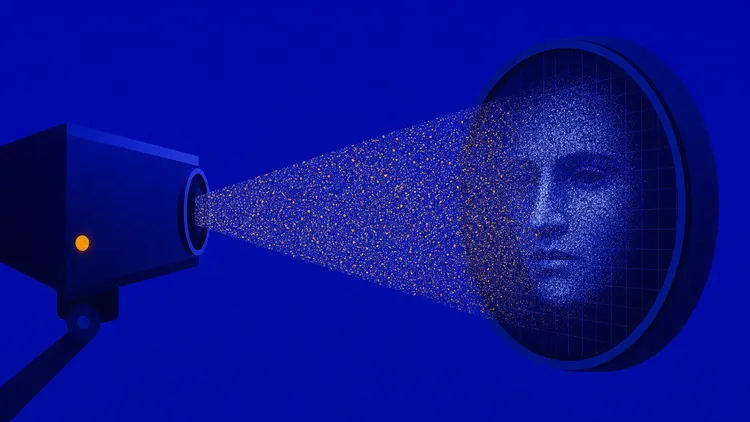
ISPCloak projects AI images through a simulated camera pipeline, imprinting sensor noise that deepfake detectors cannot tell from genuine photographs.

FineServe, a new dataset from a commercial LLM marketplace, reveals serving traffic varies fundamentally by model architecture and task type.

OPTScientist uses four AI agents to discover optimizer algorithms for transformer pretraining, including a new reduced-state matrix optimizer called RS-MR.

Adversarial Frontiers, a new arXiv preprint, argues single-budget AI robustness rankings are unstable and proposes a frontier-based evaluation framework.

Language models build shared rules instead of storing individual facts, KAIST AI finds, and the overgeneralisation affects teams fine-tuning on nested

HyGRL, a new arXiv paper from Beijing Institute of Technology, blends text with knowledge graphs to answer multi-entity questions that defeat standard RAG.

A new arXiv preprint from Purdue and Princeton shows LLM query routing can work without training data, using model self-agreement as a signal.

New OrderBench benchmark runs 2,400 calls across four open models and finds schema validity alone doesn't guarantee semantic correctness.

Agentic Real2Sim uses vision-language agents to convert real robot recordings into simulatable twins, aiming to cut the labor cost of training robots in