

Technology & AI
Safety Sentry gives AI agents a third option: ask first
A new arXiv paper from ShanghaiTech replaces binary safe/unsafe guards with a three-way EXECUTE-ASK-REFUSE routing that cuts alert fatigue for anyone
The AI knowledge 99.9% of people never discover
Daily AI and technology coverage — models, chips, agents and research, and what each development actually means for you and your business.
552 stories
A new arXiv paper from ShanghaiTech replaces binary safe/unsafe guards with a three-way EXECUTE-ASK-REFUSE routing that cuts alert fatigue for anyone

A Hybrid Oscillator Arbiter PUF generates crypto keys at 2.7 microwatts, pointing to hardware security for battery-constrained wearables and IoT devices.

Graph neural network hints lift small language model molecular property prediction by up to 74% on Tox21, according to a new arXiv preprint.

A July 2026 arXiv preprint reframes how AI systems measure their own uncertainty, deriving competing measures from one mathematical framework. Here is what

New Mila preprint combines self-supervised and supervised learning to improve neural decoding across species when labelled data is scarce.

Quantum ML preprint loads hash-based signatures into quantum memory via generative networks, a first step toward testing post-quantum crypto.

Harness Handbook from Tencent and four universities builds a behaviour-to-code map for agent harnesses that cuts planner tokens and improves edit

Google is letting U.S. users link services like Instacart, Canva and YouTube Music directly in Search's AI Mode, turning answers into actions. Here's what
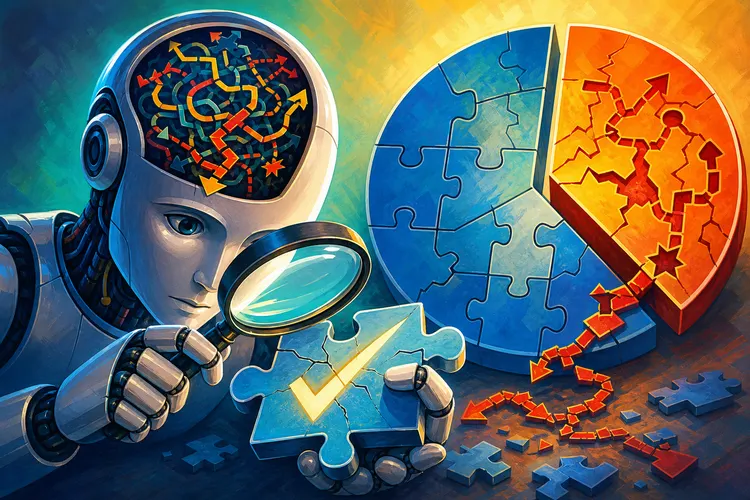
A black-box audit swaps predicates in chain-of-thought to expose when GPT-4o reaches correct answers through reasoning that ignores its stated premises.

New arXiv paper finds automatically evolving agent scaffolding doesn't consistently outperform test-time scaling, with limited generalization to new tasks.
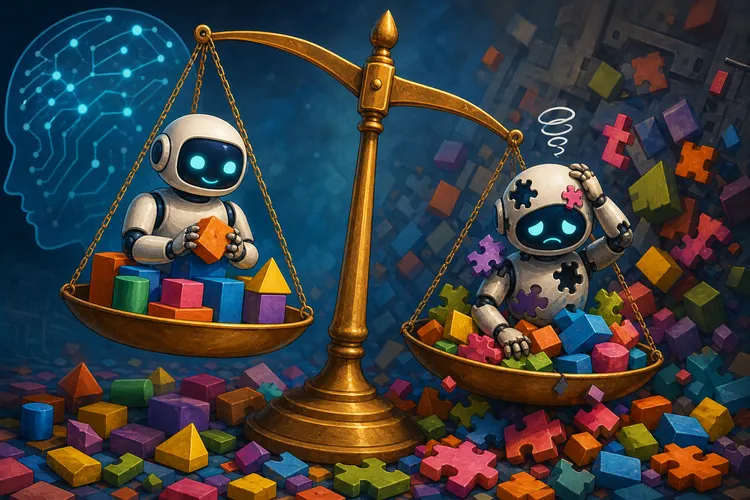
IRT rankings of AI models are unreliable when few systems are tested, 18,000 simulations show, threatening how the industry compares models.

A new preprint tested 327 real-world agent skills and found vulnerabilities across the entire skill lifecycle, from admission to evolution.