

The Australian Bureau of Statistics will shift CPI releases to the fourth Wednesday of each month from February 2027 and has scheduled its next weight update for 24 February 2027 S¹P⁴. The changes, first flagged earlier this year, are now formally confirmed on the bureau's CPI release page published 9 November S¹.
My read: The weight update deferral is the detail I'd watch. The ABS says it monitored household spending data and found no need for a mid-2026 refresh S¹ — though the bureau has not released the underlying spending data or methodology behind that assessment, so the conclusion rests on the ABS's own internal review. That means the basket of goods and services used to calculate inflation still reflects older spending patterns. If spending has shifted materially since the last update and the ABS hasn't caught it, the CPI could be understating or overstating inflation in specific categories. The next weight update lands 24 February 2027, covering January 2027 data S¹, so there's a window where any divergence goes unmeasured. For inflation analysts at fund managers, the deferral means their CPI models will rely on the existing basket weights through the rest of 2026, requiring manual adjustments if category spending visibly drifts before the official refresh S¹.
The bureau reviewed its release timing after user feedback and concluded that moving publication forward by a week would not compromise data quality S¹. The new dates will appear in the ABS release calendar S¹.
What the July 2026 CPI showed
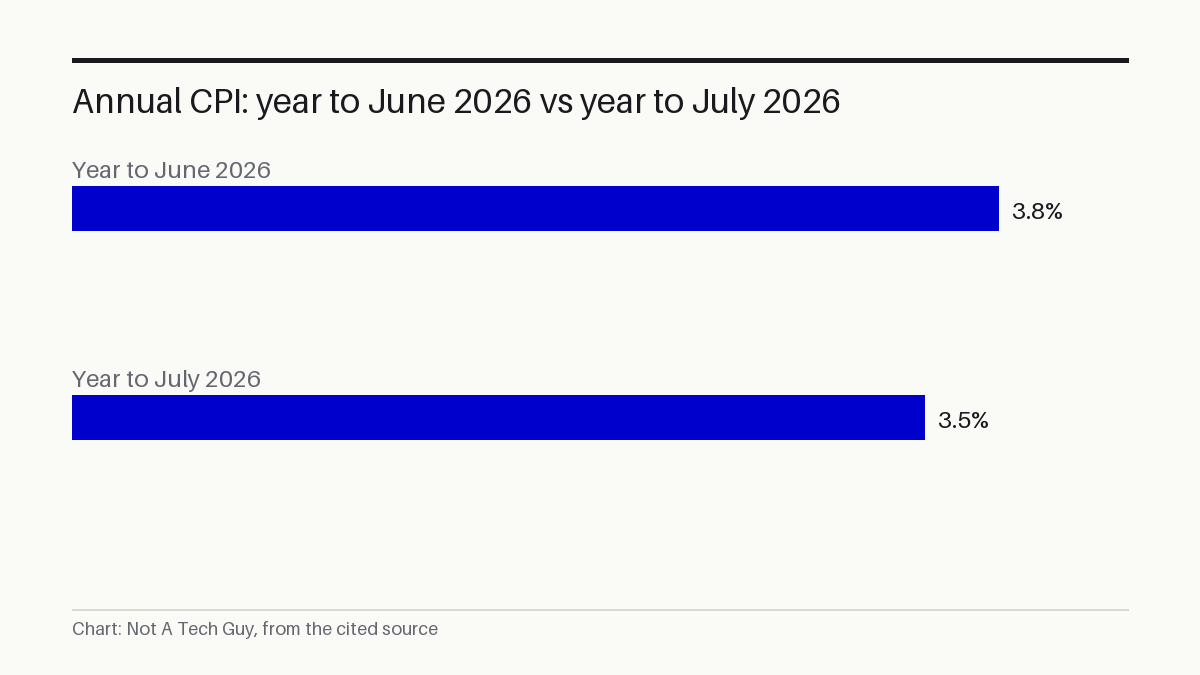
The most recent CPI print, released 26 August 2026, showed prices rising 3.5 per cent over the 12 months to July, down from 3.8 per cent in the year to June P⁶. That reading feeds directly into the Reserve Bank's assessment of whether inflation is cooling fast enough to hold rates steady.
For mortgage holders, the transmission is direct: if inflation stays above the RBA's target band, the cash rate stays higher for longer, and monthly repayments on variable loans don't fall. For renters, persistent inflation in construction costs and services keeps pressure on landlords' expenses, which flows into rent asks. For brokers, the question clients are asking is whether the next CPI print gives the RBA room to move.
How quarterly data fits the monthly schedule
The ABS puts out CPI figures every month, but the quarterly data that the RBA treats as its official inflation measure appears in tables 17 and 18 of the data downloads S¹P². Those tables get updated with the latest quarter whenever the monthly CPI coincides with March, June, September or December publications S¹P³.
The weight update, which adjusts how much each category counts in the overall index, was postponed earlier this year S¹. The ABS would have run a mid-2026 update if household spending patterns had shifted enough, but after monitoring spending data, it determined that was unnecessary S¹ — a judgment based on the bureau's own review, with no external spending dataset released for independent verification. The next update covers January 2027 and is scheduled for release on 24 February 2027 S¹.
October 2026 CPI set for 25 November release
The ABS will release October 2026 CPI data on 25 November 2026 at 11:30am AEDT P⁵. That print will be the last monthly CPI before the bureau's schedule change takes effect in February 2027. It will also be the first read on whether the downward trend from 3.8 per cent to 3.5 per cent is continuing or stalling.
Sources: S1 — ABS Consumer Price Index (quarterly inflation) — 2026-Q3 release · P2 — Consumer Price Index, Australia, August 2026 | Australian Bureau of St · P3 — Consumer Price Index, Australia, August 2026 | Australian Bureau of St · P4 — Consumer Price Index, Australia, August 2026 | Australian Bureau of St · P5 — Consumer Price Index, Australia | Australian Bureau of Statistics · P6 — CPI rose 3.5% in the year to July 2026 | Australian Bureau of Statisti · P7 — Measures of Consumer Price Inflation | RBA · P8 — Frequently asked questions (FAQs) about the Consumer Price Index | Aus
Written from 8 sourced items, 8 of them primary.