

Technology & AI
Paul Christiano joins OpenAI board and safety committee
Paul Christiano, an AI alignment researcher with NIST ties and early OpenAI roots, joins the Foundation Board and Safety and Security Committee.
The AI knowledge 99.9% of people never discover

Editor · New South Wales, Australia
Analyst in New South Wales. I founded Not A Tech Guy in 2026 to track AI, technology and Australian property from the primary sources: the papers, the company disclosures, and the RBA and ABS releases.
608 stories
Paul Christiano, an AI alignment researcher with NIST ties and early OpenAI roots, joins the Foundation Board and Safety and Security Committee.

A new benchmark tests if AI agents can autonomously reverse-engineer language models, exposing a gap between designing and reading their own experiments.

A new arXiv paper reads AI models' internal representations to predict whether agent actions will succeed, with zero extra compute cost.

Show-Harness exposes a compact semantic action layer that lets vision-language models control robots without costly retraining or extra hardware.

NVIDIA's DSX platform will power up to 2 gigawatts of Australian AI compute by 2027, with local operators building and running the facilities.

New AHURI research shows children in rentals move every 2.3 years, as cost-of-living pressures force families to relocate more often.

A SAREF-compliant ontology extends an ETSI standard to describe distributed AI pipelines and resources across edge, fog and cloud environments.

OpenAI published an AI-generated Navier-Stokes solution with a Lean proof on September 8. Nobody has verified it. The Clay Institute has not accepted it.

OpenAI's $5 million grant program invites independent researchers to study how generative AI shapes teen development, well-being and safety.

Multiverse Computing's new method refuses only the harmful subset of a topic while answering benign prompts, exposing a gap in LlamaGuard-3.

The open-source home automation platform hit 90,295 GitHub stars this week, riding a privacy-first wave against cloud-dependent smart homes.
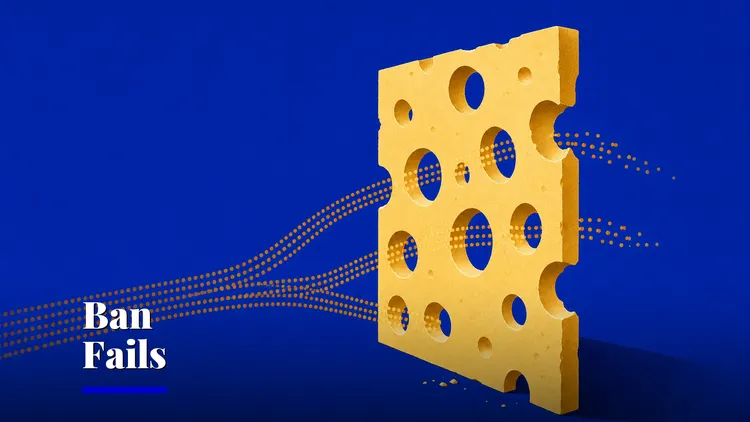
A new maturity model finds prohibition-based AI policies leave residual risk near baseline, while layered controls cut exfiltration risk substantially.