

Technology & AI
SearchAuditor fixes 32% of AI agent failures, benchmark shows
New benchmark of 1,243 failed agent runs shows even GPT-5.5 auditors fix only 26.6%, with SearchAuditor at 32.3%, a warning for agent teams.
The AI knowledge 99.9% of people never discover
Daily AI and technology coverage — models, chips, agents and research, and what each development actually means for you and your business.
551 stories
New benchmark of 1,243 failed agent runs shows even GPT-5.5 auditors fix only 26.6%, with SearchAuditor at 32.3%, a warning for agent teams.

Federated learning keeps data on-device, but gradient updates leak it. New preprint from Google and USC researchers cuts the error cost of adding privacy.

An arXiv preprint maps security threats across chiplet systems and LLM-driven chip design tools, directly affecting fabless semiconductor teams adopting

OlmoEarth Studio now computes and exports embedding vectors from satellite imagery on demand, in three model sizes from 1.4M to 89M parameters.

VLA robots deployed in wireless sensor networks can be hijacked by printable patches. A new fine-tuning defense cuts failure rates sharply.
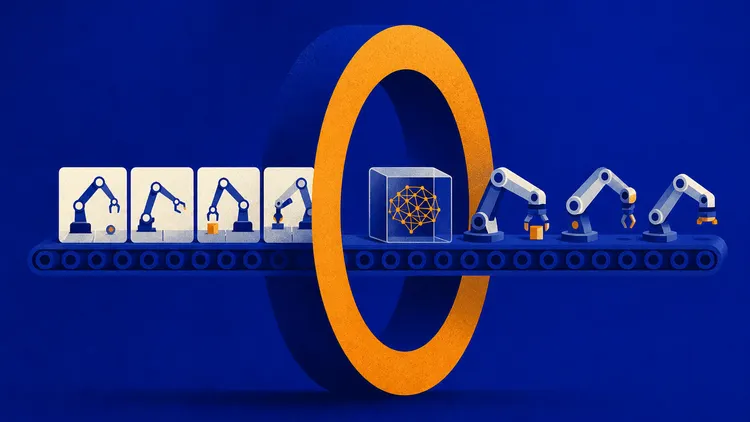
AWS's open-source Strands Robots SDK chains robot recording, training, and deployment into one agent loop with LeRobot and HF Storage Buckets.

A new study of 278 Telegram Mini Apps finds 59% contact undisclosed third parties and none offer an opt-out, exposing a transparency gap in a fast-growing

A text-only attack on skill-based AI agents silently inflates token use by 67% and runtime by 92% while keeping task completion rates unchanged.

OpenAI has appointed Dali Rajic as Chief Revenue Officer to lead its global revenue organization and help businesses turn AI into measurable value.

A new preprint proposes HARD, a framework where LLM agents automatically build and improve their own runtime defenses from observed failures.

ICML 2026's reproduction challenge used AI agents to verify 2,200 papers, and 23% had a falsified or contested claim while 49 had nothing verifiable.

An arXiv preprint shows LLMs autonomously controlling farm lighting and actuators, cutting grow cycles 35% and finding energy strategies humans missed.