

Technology & AI
Meta's 816B Muse Spark Open targets Mac Studios
The open-weight release pairs a frontier-scale model with a consumer hardware target Meta says needs two Apple M5 Ultra Mac Studios and the MLX
The top 0.01% of AI knowledge, and what it changes for your work
AI model releases and benchmarks — what each new model actually changes for the people who use it.
241 stories
The open-weight release pairs a frontier-scale model with a consumer hardware target Meta says needs two Apple M5 Ultra Mac Studios and the MLX

The GeoCloak system cuts AI geolocation accuracy from 41.2% to 9.9% across 576 cities while preserving image quality, its developers report in an

SGLang, an open-source LLM serving framework from Stanford and UC Berkeley researchers, is trending on GitHub with 36,973 stars and broad hardware
RECAST's RouterLM learns to derive evidence through computation and retrieval, hitting 75.6% success across six benchmark families.

Datawhale's hello-agents repo teaches building AI agents from scratch with ReAct, GRPO and MCP protocols, all for free.

OpenAI's Daybreak helped Sophos automate 52% of MDR cases and cut threat investigation time 96%, with no independent audit confirming the figures.

Honda Research and Penn State built a method that gives reasoning models a partial head start, lifting pass@12 across five math benchmarks.

An arXiv preprint turns chip simulation dumps into a searchable database for verification engineers, hitting 95.33% on 150 queries.

Lethbridge researchers built CourseChat, an on-premises RAG tutor for six business courses, where bigger AI models failed the classroom speed test.
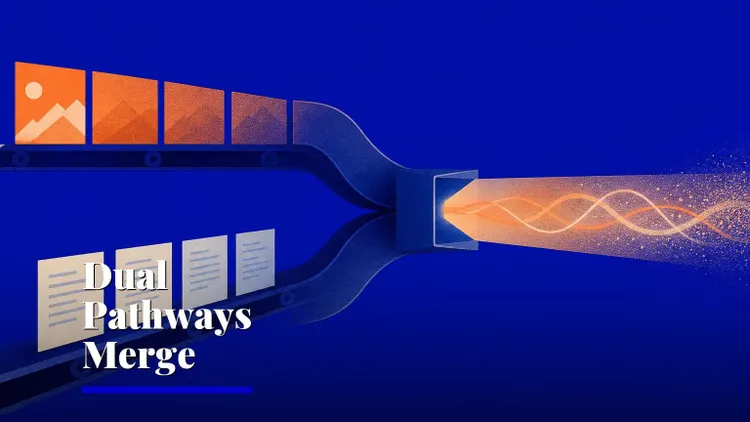
An arXiv preprint finds concatenation and native multimodal architectures fuse visual and textual data through different internal pathways.

A preprint from Huawei Research Zurich shows that scanners for malicious AI agent skills fail against an attacker who knows the detector.

Untying input and output embeddings in decoder-only LLMs lifts accuracy up to 4.74 percentage points under differential privacy fine-tuning.