
Technology & AI
Vibe coding: security prompt halves AI app flaws
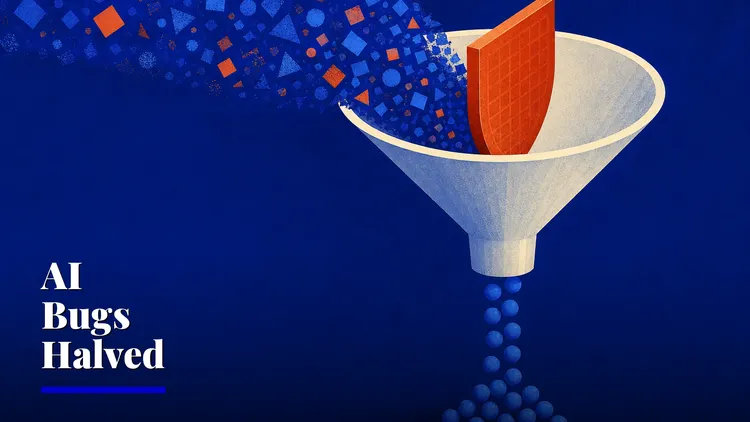
An arXiv preprint found adding security requirements to AI coding prompts cut confirmed flaws from 51 to 24 across six web apps, with zero critical issues.
The AI knowledge 99.9% of people never discover
Daily AI and technology coverage — models, chips, agents and research, and what each development actually means for you and your business.
551 stories
An arXiv preprint found adding security requirements to AI coding prompts cut confirmed flaws from 51 to 24 across six web apps, with zero critical issues.

Google's Gemini CLI offers 1,000 free AI requests daily in the terminal, with a 1M token context window and Gemini 3 models. Now 106,000 stars.

Purdue researchers found stricter EU regulatory formatting makes LLMs hallucinate more, while vaguer rules need heavier prompts for consistent output.

SRPO turns a model's completed reasoning into per-token training signals without external critics and hits 73.3% on AIME'24 with Qwen3-8B at 8% of the

A new distillation recipe shrinks LLM safety guards to run on commodity CPUs in 24ms, matching 8-billion-parameter teachers on adversarial prompts.
A multi-agent simulation engine with 71,000 GitHub stars claims to predict anything, but the README is the only evidence so far.

NVIDIA's Groq 3 LPX inference accelerator is now in full production, delivering a record 3,400 tokens/second for agentic AI workloads.
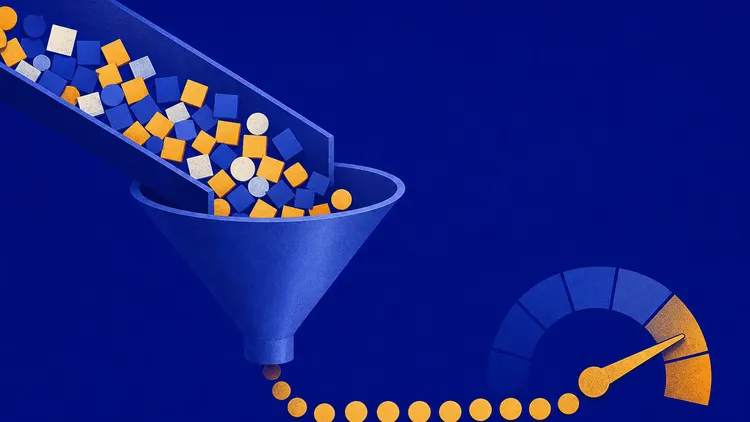
New EPFL tokenizer suite TokEval finds intrinsic metrics predict language modeling ability with correlation up to 0.80, challenging how labs pick

Vite, the open-source build tool with 82,454 stars, hit GitHub's daily trending list on August 22, 2026, five months after Vite 8.0 shipped.
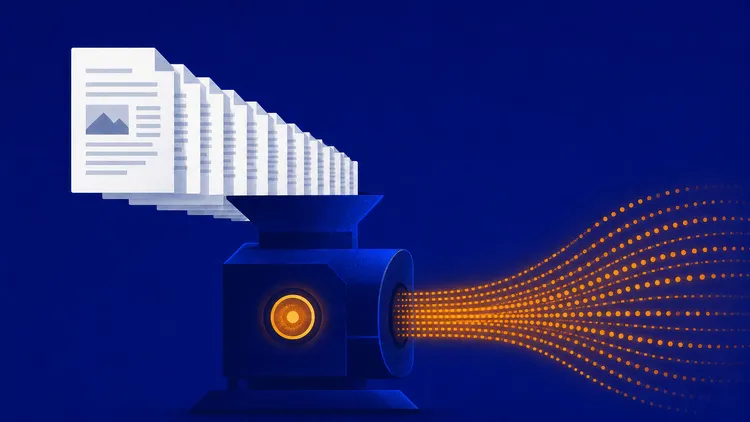
Docling, the open-source Python tool parsing PDFs, video and charts into structured data for AI agents, is trending on GitHub with 65,346 stars.
An August 2026 arXiv preprint proposes Traceable Trust, a framework for the moment AI predictions become laboratory decisions in bioscience.

BERT-LER, trained on 75 million de-identified patient records, matches benchmark models on clinical prediction tasks while explaining its own reasoning.